Defining Fair Use: What Entrepreneurs Need to Know About the Fair Use Doctrine
- Aaron Gallagher
- Mar 18, 2020
- 4 min read
Copyright law is a legal protection that gives creators exclusive rights to the use of their original works. While this appears to be a simple concept, entrepreneurs can benefit from learning about the specific nuances of copyright law, such as the Fair Use Doctrine. The concept of Fair Use is often misunderstood and can lead to serious legal concerns for those ignorant as to how it works. This post will break down what the Fair Use Doctrine is and how entrepreneurs can use it to protect themselves.
WHAT IS FAIR USE?

Under 17 U.S.C. §107, the Fair Use Doctrine allows for limited public use of copyrighted materials without permission from the copyright holder. Entrepreneurs should understand that Fair Use is not a right that they hold but a limitation on the rights of the copyright holder. What this means is that no entrepreneur is entitled to use copyrighted materials, but in limited circumstances, the court may find their use permissible.
There is a common misconception that the Fair Use Doctrine will prevent a lawsuit. This is false. The Fair Use Doctrine is not a right to protect against suit, but an affirmative legal defense that may be raised in response to a copyright infringement claim.
HOW DO I KNOW IF MY USE IS FAIR USE?
The short answer is you don’t. As Fair Use is a legal defense, it can only be analyzed within a court of law. This means that you as the entrepreneur can’t determine if the use was fair use as it will be for the court to decide. There is a common misconception that if a person only uses a small amount of the copyrighted material, such as 10 seconds of a song, they are safe from suit. This is a myth as there is no bright-line rule and all fair use cases are determined on a case by case basis. The factors for analyzing fair use are as follows:
1) The purpose and character of the use, including if the use is for a commercial nature or a non-profit educational use;
2) The nature of the copyrighted work;
3) The amount and substantiality of the portion used in relation to the copyrighted work as a whole; and,
4) The effect of the use on the market value of the copyrighted work
PURPOSE AND CHARACTER OF THE USE
These factors, like most legal tests, are intentionally vague to allow for flexibility in applying the law. To understand the first factor of purpose and character, you can also refer to this as the transformative factor. To satisfy this factor, you must show that while you did use the copyrighted material, your use has transformed the original by adding new expression, meaning, or understanding of the original.

A good example of this is Weird Al Yankovic. Yankovic has made a career as a parody musician, taking popular songs and reimagining their meaning with new lyrics and stories. However, you don’t see Yankovic being buried alive in copyright suits because his parodies are transformative works that add something new to the originals.
THE NATURE OF THE COPYRIGHTED WORK

When determining this factor, courts are typically concerned with whether the copyrighted material was a factual work or a work of fiction. Often, courts are more lenient in a finding of fair use in cases where the materials in question are factual documents. An example of this is a historian using speeches or letters in their biography of a historical figure. By contrast, courts are less likely to find in favor of Fair Use if the material was a fictional work as those are more closely tied to the individual expression of the author.
THE AMOUNT AND SUBSTANTIALITY OF THE COPYRIGHTED WORK USED

Of all the factors, this is perhaps the most straightforward. If your use of the work is
minimal and bears no substantial similarity to the original, a court is more likely to find in favor of Fair Use. By contrast, if you borrow large chunks of the original work, a court is likely to find in favor of infringement. In Warner Bros. Entertainment, Inc. v. RDR Books, the court ruled that the defendant’s Harry Potter encyclopedia infringed on the plaintiff’s copyright because it extensively copied large blocks of text from the books.
THE EFFECT OF THE USE ON THE MARKET VALUE OF THE COPYRIGHTED WORK

Under this factor, the question is whether your use of copyrighted material impacted the holder’s ability to receive income from their property? In Roger v. Koons, a sculptor made hundreds of thousands of dollars from sculptures modeled after a photographer’s pictures. The court held that this was not fair use because the sculptors use impacted the ability of the photographer to profit from his work. It did not matter that the photographer would not have made sculptures, only that the sculptor’s sale of sculptures prevented the photographer from doing the same.
THE UNOFFICIAL FIFTH FACTOR: MORALITY
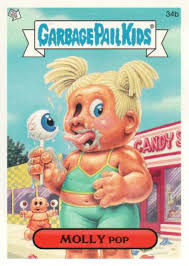
While not a statutory factor, it should be noted that the morality of one’s use can impact the court’s decision. In Original Appalachian Artworks, Inc. v. Topps Chewing Gum, Inc., the court ruled that an entrepreneur’s parody of the Cabbage Patch Kids infringed on the copyright due to their vulgar and grotesque appearance. This was surprising as parody is usually protected under Fair Use. Therefore, entrepreneurs should be aware that these are flexible standards that may be influenced by subjective views.
WHAT CAN I DO TO ENSURE I DON’T FALL OUTSIDE OF FAIR USE?
As there is no way to determine if one’s use of copyrighted material falls under Fair Use outside of court, it would be best for entrepreneurs to limit their use of other’s copyrighted materials. However, if you decide to use copyrighted material, these steps might help:
· Transform the borrowed material by adding new meaning beyond the original.
· Restrict yourself to the use of factual sources.
· Use as little from other sources as possible.
· Give credit whenever you can.
· Ask your attorney.

At the time of this post, Aaron Gallagher is a 2L student at Penn State's Dickinson Law in Carlise, PA. He is interested in pursuing a career in tax or entrepreneurship law.
Sources:
https://www.bigcommerce.com/ecommerce-answers/what-fair-use-and-why-it-important/
https://www.nolo.com/legal-encyclopedia/fair-use-rule-copyright-material-30100.html
17 U.S.C. §107
https://fairuse.stanford.edu/overview/fair-use/four-factors/
https://www.blogherald.com/features/the-limitations-of-fair-use/
Original Appalachian Artworks, Inc. v. Topps Chewing Gum, Inc., 642 F.Supp. 1031 (N.D. Ga. 1986).
Rogers v. Koons, 960 F.2d 301 (2d Cir. 1992).
Warner Bros. Entertainment, Inc. v. RDR Books, 575 F.Supp.2d 513 (S.D. N.Y. 2008).
Photo Sources:
https://www.forbes.com/sites/zackomalleygreenburg/2019/02/10/how-weird-al-topped-guns-n-roses-and-the-grateful-dead-for-latest-grammy-win/#10d4d17e3d44(Weird Al Yankovic)
https://www.revolutionary-war-and-beyond.com/american-historical-documents.html(Declaration of Independence)
https://www.brunswicknaturesculpturewalk.com/workshops.html(Leaf sculpture)
https://www.ebay.com/c/1231678347(Garbage Pail Kid)

This was one of the more clearly-written legal explanations I have seen for almost any topic so far. I especially liked the way you provided an example for each element of a fair use defense. In my experience, fair use is thrown around quite a bit but is generally described as something that is simple and clear-cut, which it obviously is not. The important takeaway for entrepreneurs, I think, is that this is an affirmative defense, and that they need to understand that there is still a risk that they will have to defend a lawsuit.
Hi Aaron,
Your post was very informative and easy to read! The images kept it lighthearted while still keeping me engaged in the actual content of the text. You anticipated and answered a lot of the questions that anyone who doesn't know what Fair Use is would have, and did so efficiently and concisely. Love that you ended with takeaways to ensure compliance and eliminate worries on what to do next. Well done!
This was a very helpful post and a must read for entrepreneurs! It provided the basics to understand copyright right law and the protections under fair use to protect entrepreneurs from unnecessary trouble and headaches in their business.
You laid out a clear analysis of the rules for one to analyze if a certain use of protected material can be considered fair use, or whether it’s Copyright Infringement.